
Imagine waking up to the smell of freshly pulled espresso in your own home. Whether you’re a coffee enthusiast or just starting, having an espresso machine at home turns your daily coffee into an art.
With so many options, choosing the right one for you can be overwhelming. This guide covers everything you need to know about home espresso machines, from the types and features to how to maintain them for the best performance.
By the end, you’ll be ready to choose the perfect espresso machine for your budget, lifestyle, and coffee goals.
The Top 3 Espresso Machines for Home
Product | Features | Price | |
|---|---|---|---|
 |  Breville Bambino Plus |
| $399.95 |
 |  Breville Barista Express |
| $549.95 |
 |  Rancilio Silvia |
| $900 |
Choosing the Right Machine
Choosing the right machine starts with understanding your own needs and wants. Let’s break it down:
1. Budget
Your budget will narrow down the options. The Delonghi Stilosa Espresso Machine is an excellent example of the best budget espresso machine, known for its affordability and reliable performance. Espresso machines range from under $200 to thousands of dollars.
2. Machine Type
Choose from:
- Super Automatic Machines: These do everything for you, perfect for beginners or busy users.
- Semi-Automatic Machines: Give you more control by letting you grind and tamp your coffee, while the machine does the water pressure.
- Manual Machines: For purists who want total control over every step of the brewing process.
- Dual Boiler Machines: For advanced users who want to pull espresso and steam milk at the same time.
3. Features
Look for:
- Built-in grinders
- Steam wands for frothing milk
- Programmable settings
- Compact designs for smaller spaces
4. Research Brands and Models
Read reviews and compare brands like Breville, De’Longhi, or Gaggia.
Home Espresso Machines
1. Super Automatic Machines
- Easy to use, one-touch brewing.
- Grinds, stamps, and brews for you.
- For beginners or those who want convenience.
2. Semi-Automatic Machines
- A balance of control and convenience.
- Grind and tamp yourself but the machine does the pressure.
- Popular with coffee enthusiasts.
3. Manual Machines
- Total control over the brewing process.
- Requires skill and practice to get the perfect shot.
- For coffee purists.
4. Dual Boiler Machines
- Dual boilers for independent brewing and steam functions.
- Can make espresso and milk-based drinks at the same time.
- For advanced users or entertaining guests.
Espresso Machine Brands and Models
Home Espresso Machines
Here are some top picks for every skill level and budget:
1. Breville Bambino Plus

The Breville Bambino Plus is a compact and beginner-friendly espresso machine designed for effortless brewing at home. It delivers professional-quality espresso and milk frothing in a sleek, space-saving design.
2. Breville Barista Express
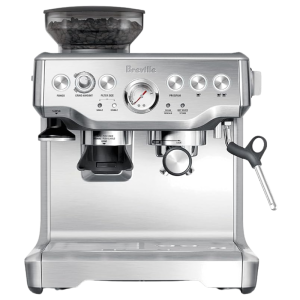
The Breville Barista Express is an all-in-one espresso machine that combines a built-in grinder and professional-grade features for crafting café-quality drinks at home.
3. Silvia Rancilio

A semi-automatic espresso machine featuring a commercial-grade group head for excellent heat stability and extraction quality, along with an articulating steam wand for precise milk frothing. Available on Amazon.
4. Top-Rated Espresso Machine Brands
When it comes to choosing the best espresso machine, the brand can play a significant role in determining the quality and performance of the machine.
Here are some top-rated espresso machine brands that are known for their high-quality products:
- Breville: Known for their high-end semi-automatic machines with built-in grinders and powerful steam wands, Breville machines like the Breville Barista Express offer a perfect blend of convenience and control. Their user-friendly interfaces and reliable performance make them a favorite among home baristas.
- DeLonghi: DeLonghi is renowned for its automatic machines with digital interfaces and powerful steam wands. Models like the DeLonghi Magnifica are designed for ease of use, making them ideal for those who want a hassle-free brewing experience without compromising on quality.
- Gaggia: Gaggia’s high-end semi-automatic machines with manual interfaces and powerful steam wands are perfect for those who appreciate the art of brewing espresso. The Gaggia Classic Pro, for instance, is a popular choice for its robust build and consistent performance.
- La Marzocco: Known for their high-end commercial-grade machines with advanced features and high-quality construction, La Marzocco machines are a staple in many coffee shops. Their home models, like the La Marzocco Linea Mini, bring professional-level brewing to your kitchen.
- Rancilio: Rancilio’s high-end commercial-grade machines with advanced features and high-quality construction are built to last. The Rancilio Silvia is a well-regarded model among serious home baristas for its durability and excellent espresso quality.
Choosing a machine from one of these top-rated brands ensures you’re investing in a reliable and high-performing espresso maker.
How Machines Work
Espresso machines are clever contraptions that turn coffee grounds into the delicious, concentrated drink we all love. At their heart they use heat, pressure, and precision to extract the perfect balance of flavors, to create a shot of espresso with a thick creamy crema on top.
Let’s go through how they work and the key parts that make it happen.
1. Boiler: The Heat Source
The boiler is the center of an espresso machine, it heats the water to the ideal brewing temperature of 190–200°F (88–93°C). Consistency is key as even small variations can affect the taste and quality of the espresso.
A dedicated steam boiler is crucial for producing powerful steam pressure, which is necessary for creating silky microfoam required for latte art.
- Single Boiler Machines: These have one boiler that switches between brewing and steaming temperatures. While cheaper, this design can slow you down if you’re making multiple drinks.
- Dual Boiler Machines: These have two boilers for brewing and steaming, so you can use them at the same time. Perfect for those who make milk-based drinks frequently.
- Heat Exchange Boilers: These use one boiler but keep the brewing temperature constant by separating the water for brewing and steaming through a heat exchanger.
The material of the boiler—stainless steel, copper, or brass—also affects heat retention and energy efficiency.
2. Pump: The Pressure
Espresso needs pressure to push water through the coffee grounds. The pump creates this pressure, usually 9 bars, which is 130 psi or 9 times atmospheric pressure.
- Vibratory Pumps: Found in home machines, these are compact, cheap, and work well but can be noisy.
- Rotary Pumps: Found in higher-end machines, these are quieter, more durable and provide consistent pressure, so perfect for commercial or serious home baristas.
Consistent pressure is key to proper extraction, so the water evenly saturates the coffee grounds and pulls out the flavors without over-extracting bitterness.
3. Group Head: Where it Happens
The group head is the interface between the machine and the coffee. It distributes the hot, pressurized water evenly over the coffee grounds to extract evenly.
- Portafilter: A metal basket that holds the coffee grounds and sits in the group head. You need to tamp the grounds evenly for water flow.
- Shower Screen: A perforated screen that spreads the water evenly over the coffee puck.
- Gasket: The seal between the portafilter and group head to prevent leaks during brewing.
Good machines have precision group heads made from brass or stainless steel to maintain temperature and pressure during the brewing process.
4. Grind Size and Tamp
Espresso machines rely on grind size and tamping to deliver optimal results. The coffee must be ground fine enough to create resistance to the water but not so fine it clogs the machine.
Tamping—compressing the coffee grounds in the portafilter—ensures even resistance and prevents water from channeling through the weak spots.
5. The Extraction
Now everything is in place:
- Water is heated to the right temperature in the boiler.
- The pump kicks in and water flows through the group head at 9 bars.
- The hot water hits the coffee grounds and extracts the oils, flavors, and aromas.
- And out comes a nice espresso shot, syrupy and with a layer of golden crema.
Extra Features to Help Brewing
- PID Controllers: Many modern machines have a PID (Proportional-Integral-Derivative) controller to regulate temperature with precision, so you get consistent shots.
- Pre-Infusion: Some machines have a pre-infusion step, where low-pressure water wets the coffee grounds before full-pressure brewing. This ensures even extraction and prevents channeling.
- Pressure Gauges: High-end machines often have pressure gauges so you can see the brewing pressure in real time and adjust your technique.
- Super Automatic Machine: A super-automatic machine automates multiple processes like grinding, brewing, and milk foaming, making it convenient for producing a wide variety of drinks with minimal user intervention.
Why Temperature and Pressure Matter
Espresso is a balance of science and art. If the water is too hot it will scorch the coffee and you’ll get a burnt or bitter taste.
If it’s too cold the coffee won’t extract and you’ll get a weak or sour taste. If there’s not enough pressure the coffee won’t extract all the flavors and if there’s too much pressure it will over-extract the coffee and you’ll get a harsh taste.
A good espresso machine removes the variables for you, gives you consistent pressure, and keeps the water temperature within a narrow range.
Now you know how espresso machines work you can appreciate the craftsmanship that goes into every cup. Whether you’re a beginner or an experienced barista, knowing how these machines work gives you the power to make better decisions and fine-tune your technique for the perfect shot every time.
Machine Maintenance
Maintenance is key to keeping your machine in top shape and getting great coffee. Neglecting regular maintenance can lead to poor performance, bad flavors, and even machine damage over time. Here’s a full guide to maintaining your machine for the best results.
Daily Maintenance: Keep It Clean
Clean the Steam Wand: The steam wand is used for frothing milk but can become a bacteria breeding ground if not cleaned properly. After each use:
- Wipe the wand with a damp cloth to remove the milk.
- Purge the wand by releasing steam for a few seconds to get rid of the milk inside.
- For stubborn buildup, soak the wand in a mixture of water and steam wand cleaner and wipe it clean.
Regular maintenance is crucial for all types of espresso makers to ensure optimal performance and longevity.
Flush the Group Head: After a shot, the coffee oils and grounds stay in the group head. Flushing it daily will keep it clean and prevent old coffee residue from affecting the flavor of future shots.
- Run hot water through the group head without the portafilter for a few seconds.
- Use a group head cleaning brush to get rid of coffee grounds stuck in the crevices.
Empty the Drip Tray and Water Tank
- Remove the drip tray and empty it to prevent water overflow and bad odors.
- Rinse and refill the water tank with fresh filtered water daily to prevent mineral buildup.
Weekly Maintenance: Deep Cleaning
Backflush with Cleaning Tablets: Backflushing is a process that cleans the internal parts of the machine, especially the valves and passages in the group head.
Most semi-automatic and manual machines can do this:
- Put a cleaning tablet in a blind portafilter (a portafilter with no holes).
- Lock the portafilter in the group head and run the machine for 10-15 seconds then stop.
- Repeat the process a few times and let the cleaning solution circulate.
- Rinse thoroughly by running clean water through the machine several times.
Clean the Portafilter and Basket: Coffee oils can accumulate on the Portafilter and filter basket and affect the flavor. Soak them in a mixture of warm water and espresso machine cleaner and scrub with a soft brush to remove residue.
Check and Clean the Shower Screen: The shower screen distributes water over the coffee grounds. Over time it can get clogged with oils and grounds:
- Remove the screen with a screwdriver (check your machine’s manual).
- Soak it in the cleaning solution and scrub gently before reassembling it.
Monthly Maintenance: Descaling and Checkup
Descale the machine mineral deposits (scale) from hard water, which can build up in the boiler and water lines and affect temperature and pressure. Descaling removes these deposits:
- Use a commercial descaling solution or a mixture of white vinegar and water (check your machine’s manual for compatibility).
- Fill the water tank with the solution and run it through the machine as if brewing espresso.
- Rinse thoroughly by running clean water through the machine several times to remove any descaling residue.
Check Gaskets and Seals: Check the group head gasket for wear and tear as it can deteriorate over time and cause leaks. If you see cracks or flattening, replace it to ensure a tight seal between the portafilter and group head.
Quarterly or Seasonal Maintenance: Deep Servicing
Lubricate Moving Parts: Over time the moving parts in some machines, like the lever on a manual espresso machine, can seize up. Apply food-safe lubricant to keep them running smoothly.
Replace Water Filters: If your machine has a water filter, replace it as per the manufacturer’s instructions. This prevents scale buildup and ensures the water is good for brewing.
Check the Pump and Boiler: For high-end machines or machines in heavy use, consider having a professional check the pump and boiler to make sure they’re running smoothly.
Maintenance not only prolongs the life of your espresso machine but also ensures every cup of coffee tastes as good as the first.
Dirty components, scale buildup, and worn-out parts can affect extraction and result in bitter or sour-tasting coffee. Regular care keeps the machine running smoothly, saves on costly repairs, and preserves your espresso.
Tips to Prolong Your Machine’s Life
- Use Filtered Water: Hard water can cause scale to build up faster than soft or filtered water. Using a water filtration system reduces maintenance and improves coffee flavor.
- Don’t Overload the Machine: Let the machine cool down after extended use to prevent overheating, especially for smaller or single boiler machines.
- Store the Machine: If you’re not using the machine for a while, clean and dry it and store it in a cool dry place.
Troubleshooting Common Issues
Even the best espresso machines can encounter issues from time to time. Here are some common problems and their solutions to keep your machine running smoothly:
- Clogged Steam Wand: If your steam wand is clogged, it can affect milk frothing. Run a cleaning solution through the steam wand to remove any blockages. Regularly purging the wand after each use can prevent this issue.
- Poor Espresso Quality: If your espresso tastes off, check the grind of your coffee beans. The grind size should be fine but not too fine to clog the machine. Also, ensure you’re tamping the coffee grounds with consistent pressure. Uneven tamping can lead to poor extraction.
- Machine Not Turning On: If your machine isn’t powering up, first check the power cord to ensure it’s properly plugged in. If that’s not the issue, check your circuit breaker or fuse box to make sure the machine is receiving power.
- Leaks: Leaks can occur if there are loose connections or worn-out seals. Inspect your machine for any signs of leaks and tighten any loose connections. If the problem persists, you may need to replace the gaskets or seals.
By addressing these common issues, you can ensure your espresso machine continues to deliver great coffee.
Extras and Add-ons
Add to your espresso experience:
- Coffee Grinder: Burr grinder for consistent grind.
- Steam Pitcher: For frothing milk.
- Espresso Cups: Keep your coffee hot and look good.
- Syrups and Flavorings: Try vanilla or caramel.
- Seattle Coffee Gear: A reputable retailer known for its expert selection of coffee-related products.
Pre-Brew Accessories
To brew the perfect shot of espresso, having the right pre-brew accessories is essential. Here are some must-have items:
- Coffee Beans: Fresh, high-quality coffee beans are the foundation of a great espresso. Look for beans that are roasted specifically for espresso to get the best flavor.
- Coffee Grinder: A burr grinder is the best type of grinder to use for espresso. It produces a consistent grind size and doesn’t generate heat, which can damage the beans. Consistency in grind size is crucial for even extraction.
- Tamper: A tamper is used to compress the coffee grounds in the portafilter. Proper tamping ensures a consistent flow of water through the grounds, which is key to a balanced extraction.
- Portafilter: The portafilter holds the coffee grounds in place during the brewing process. It’s important to use a portafilter that fits your machine and is made of durable materials.
- Distribution Tool: A distribution tool helps to evenly distribute the coffee grounds in the portafilter before tamping. This ensures an even extraction and prevents channeling.
Having these accessories on hand will help you achieve the perfect shot of espresso every time.
Post-Brew Accessories
Enhance your espresso experience with the right post-brew accessories. Here are some items that can make serving and enjoying your espresso even better:
- Demitasses: Demitasses are small cups used to serve espresso. They are designed to keep your espresso hot and are the perfect size for a single shot.
- Saucers: Saucers hold the demitasses and can also be used to serve sugar, cream, or other condiments. They add a touch of elegance to your espresso presentation.
- Spoons: Spoons are used to stir the espresso and can also be used to scoop sugar or other condiments. Having a set of espresso spoons adds to the overall experience.
- Sugar and Creamer: Sugar and creamer are popular condiments that can be used to sweeten and flavor your espresso. Offering these options allows you to cater to different tastes.
- Syrups: Syrups are flavored liquids that can be added to espresso to create different flavor profiles. Vanilla, caramel, and hazelnut are popular choices that can add a new dimension to your espresso.
With these post-brew accessories, you can elevate your espresso experience and enjoy your coffee just like at a coffee shop.
Space and Portability
When selecting an espresso machine for home use, the size and portability of the machine play a crucial role, especially if you have a small kitchen or limited counter space.
A thoughtfully chosen machine not only fits seamlessly into your kitchen setup but also enhances your brewing experience without feeling cumbersome. Let’s explore how space and portability impact your decision.
Compact Machines for Small Kitchens
Compact espresso machines like the Breville Bambino Plus are ideal for small spaces. Measuring just a few inches wide, these machines are designed to fit neatly on your countertop without taking up valuable real estate.
Despite their smaller size, compact machines don’t necessarily compromise on performance, offering features like fast heat-up times and automatic milk frothing.
For tiny kitchens or apartments, consider machines with vertical designs that maximize functionality while minimizing the footprint. Slim, upright machines are a game-changer for coffee lovers in urban settings with tight quarters.
Built-In Grinders for Space Efficiency
Machines equipped with built-in grinders, such as the Breville Barista Express, are excellent space-savers. These multifunctional machines eliminate the need for a separate grinder, streamlining your coffee setup and reducing clutter.
By combining two essential tools into one, they free up counter space while maintaining high-quality coffee preparation.
Built-in grinders also ensure that the grind size and coffee freshness are tailored to the machine, simplifying the brewing process for beginners and enthusiasts alike.
Lightweight and Portable Machines
Portability is another key factor, particularly if you like to rearrange your kitchen layout or need to store the machine after use. Lighter machines made from materials like aluminum or plastic are easy to move, clean, or stow away when not in use.
For those who travel frequently or enjoy taking their espresso setup on the road—think weekend getaways or RV adventures—a lightweight, portable espresso machine like the Wacaco Nanopresso offers an excellent solution.
These machines are compact and highly portable, allowing you to enjoy quality espresso wherever you go.
Consider Counter Height and Depth
Before purchasing, measure the available space in your kitchen, including both height and depth. Some machines, especially those with steam wands or water reservoirs, require additional clearance to operate effectively.
If your counter space is shallow, look for machines with front-loading water tanks or removable components that are easy to access.
Wall Mounts and Storage Solutions
For those who truly lack counter space, consider creative storage solutions like wall-mounted shelves or cabinets to store accessories such as portafilters, cups, and cleaning tools.
Keeping your espresso machine accessories organized enhances your coffee-making experience while maintaining a tidy kitchen.
Aesthetic Considerations
Beyond size and functionality, the aesthetic of your machine should complement your kitchen decor. Many compact machines come in sleek, modern designs or a variety of colors, ensuring they blend well with your existing appliances and add visual appeal to your space.
By factoring in space and portability, you can choose an espresso machine that fits effortlessly into your home, making your coffee routine as enjoyable and efficient as possible.
FAQs
Is it worth making espresso at home?
Yes! Home espresso machines save you money in the long run and you can customize your drinks.
What’s the difference between a coffee machine and an espresso machine?
Coffee machines brew drip coffee, espresso machines use pressurized water to create rich concentrated shots.
Do you need a special machine to make espresso at home?
Yes, espresso requires high pressure (around 9 bars) which only an espresso machine can achieve.
How big of a machine do I need?
Choose based on your counter space and usage. Compared to other espresso machines, various models offer differing capabilities such as dual boilers, built-in grinders, and ease of use. Compact machines are enough for most households.
Conclusion
Choosing the perfect espresso machine for home boils down to understanding your preferences, budget, and skill level. By exploring the types, features, and maintenance tips outlined here, you’re well on your way to creating café-quality drinks at home.
What’s your favorite espresso machine? Share your thoughts in the comments, or let us know your go-to coffee recipe!


